
Reflections from the Canton Fair
Seeing Global Trade Up Close

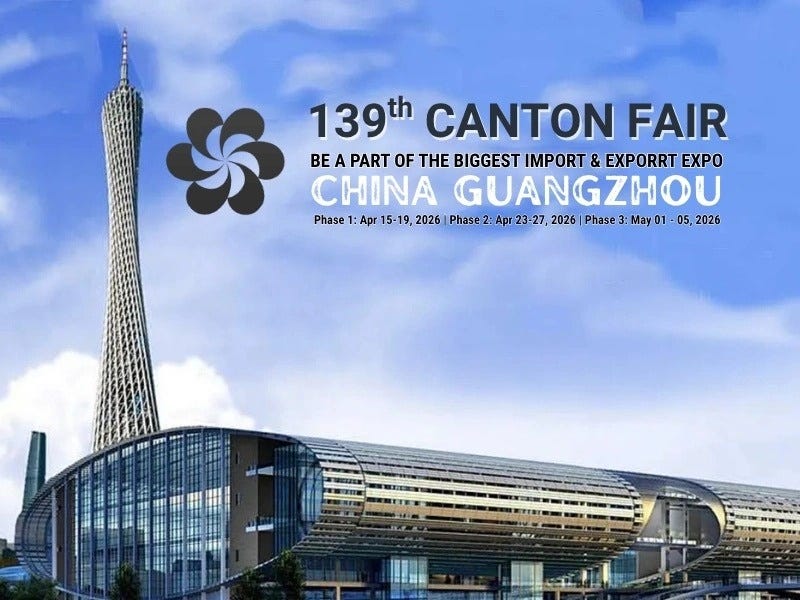
I attended the China Import and Export Fair in Guangzhou, held at the Canton Fair Complex in Pazhou, from April 15 to April 19, and the experience forced me to rethink what international trade looks like when it is not filtered through textbooks, headlines, or abstract policy debates. Established in 1957, the Canton Fair is one of China’s most important trade platforms and a major symbol of its outward-facing economic strategy. To move through that space as a buyer was to witness trade as a living political economy of deal-making, industrial promotion, logistics, and state-backed commercial ambition.
What struck me most was not only the scale of the fair, but the breadth of affordable technologies being offered for markets across Africa and the wider Global South (i.e. Africa, Latin America, the Caribbean, South Asia, Southeast Asia, the Middle East, and parts of Oceania, especially smaller island states). Electric vehicles, solar powered drones, solar panels, inverters, storage systems, smart mobility tools, agricultural technologies, consumer goods, and a range of new energy products were presented with a level of pricing and product adaptation that made their market potential immediately visible. The question that emerged for me was…
how China has built a commercial ecosystem capable of producing, scaling, and exporting them at a pace and price that many other industrial economies struggle to match. The answer lies partly in governance, industrial policy, infrastructure, and supply chain coordination.
The physical infrastructure of Guangzhou sharpened that realization. The city and the fair complex reflect a degree of planning, investment, and logistical integration that contrasts sharply with the infrastructural decay visible in much of the United States. That contrast is political. Infrastructure is a material expression of priorities, and the question of who gets roads, transit, ports, energy systems, and digital connectivity is inseparable from the question of state capacity and public purpose. In China, infrastructure appears to function as a support system for commerce and as an instrument of national strategy. In the United States, by contrast, infrastructure often appears fragmented, delayed, privatized, and trapped inside partisan spectacle.
This trip exposed the limitations of learning international trade only through books. One can study tariffs, duties, sanctions, and trade agreements in the abstract, but those concepts take on a different meaning when one is immersed in the actual spaces where contracts are negotiated, where buyers and sellers assess risk, and where policy becomes price. Trade is never neutral. It is shaped by law, by access to capital, by diplomacy, by sanctions regimes, and by the state’s willingness to support industrial production rather than merely regulate it. Being present at the fair made clear that global commerce is about the political architecture that determines which goods move, whose goods move, and under what conditions.
That realization also invites a harder question about propaganda and governance.
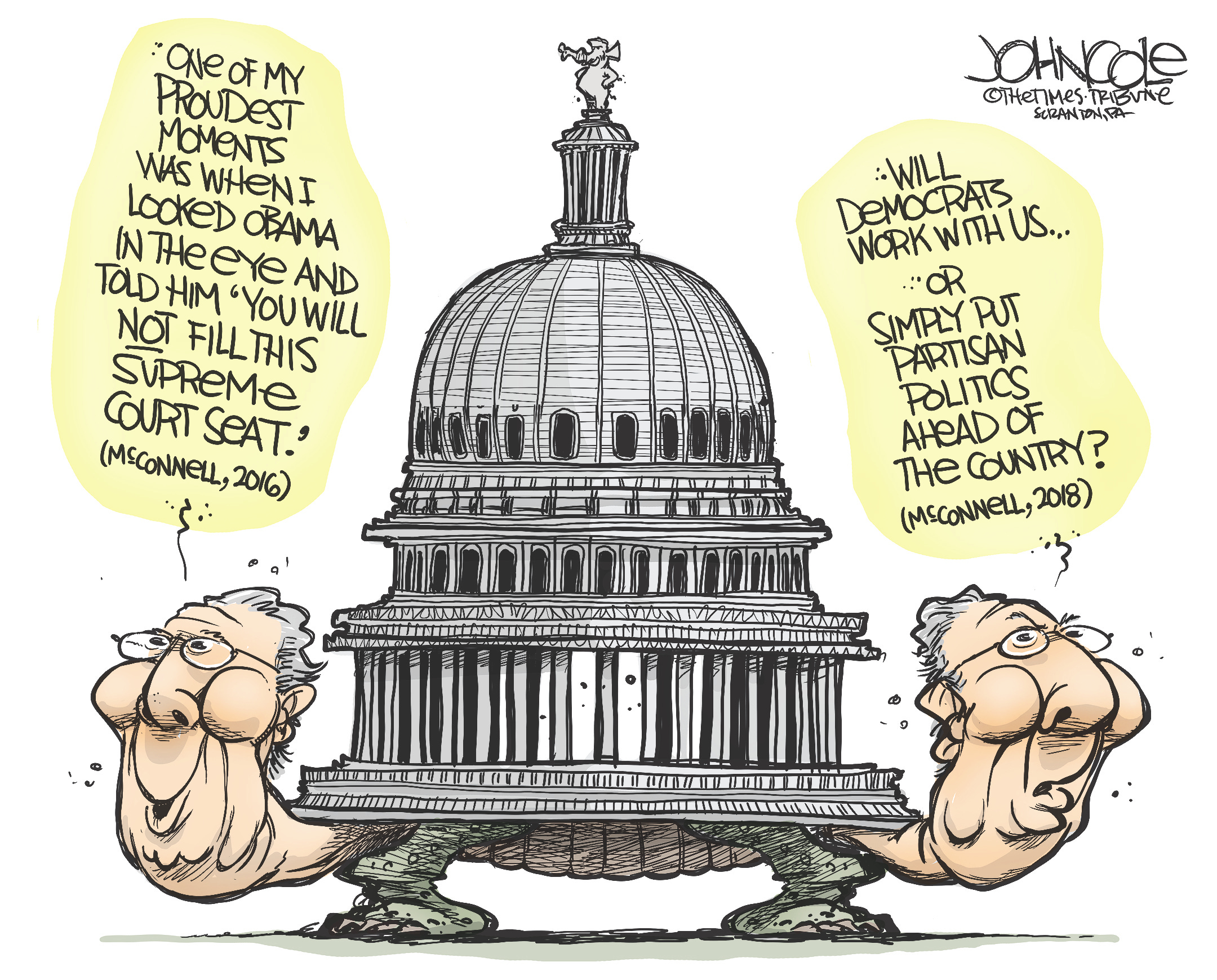
The United States frequently presents itself as the benchmark of freedom, market efficiency, and democratic legitimacy, yet many of its own structural realities tell another story of widening wealth gaps, a housing crisis in which rents often outpace mortgage payments, weakened public transportation, and a national conversation so polarized that basic material decline is often interpreted through partisan loyalty rather than public accountability.
If both major political parties remain constrained by elite and corporate interests, then the deeper issue is not simply which party governs, but whether the political system is capable of governing for the public at all. That is a question of legitimacy, not just policy.
China, of course, is not beyond criticism. Its governance model raises its own questions about labor, surveillance, political control, and the limits of public dissent. But the fair made one thing clear: China has developed a strategic relationship between infrastructure, industrial policy, and export power that the United States has not matched. Whether one admires or critiques that model, it is difficult to deny that it has produced visible results. The challenge for scholars and policymakers is to ask why the United States, with all of its wealth and institutional history, has struggled to deliver comparable public infrastructure, industrial coherence, or trade strategy that serves ordinary people rather than entrenched interests.
In that sense, the Canton Fair was a marketplace and a lesson in political economy. It showed that the real contest in global trade is between governance models, development strategies, and competing visions of the public good. For me, the experience clarified that international trade cannot be understood from a distance. It must be seen, felt, and analyzed within the material spaces where economic power is organized. Only then does one begin to understand the deeper relationship between trade agreements, infrastructure, state power, and the future of development.

Sources:
China Import and Export Fair. (n.d.). Canton Fair. https://www.cantonfair.org.cn/en/
China Import and Export Fair. (n.d.). General information. https://cief.cantonfair.org.cn/en/cfintro/cfintro.html
Lister, J., & LeBaron, G. (2012). Shopping for sustainability at the Canton Fair. University of British Columbia. https://sppga.ubc.ca/wp-content/uploads/sites/5/2016/03/shopping-for-sustainability-at-canton-fair.pdf
Luo, Q., Pang, J., & Jin, W. (2011). An empirical study on the economic impact of the events with input output model: A case study of Canton Fair, China. Acta Geographica Sinica, 66(4), 487 to 503. https://www.geog.com.cn/EN/10.11821/xb201104006
Shao, B., & Li, Z. (2024). The impact of exhibition economy on China’s import and export trade and countermeasures: A case study of the Canton Fair. Academic Journal of Business & Management, 6(11), 36 to 41. https://doi.org/10.25236/AJBM.2024.061106
Xinhua News Agency. (2019, April 28). In pics: History of Canton Fair. http://www.xinhuanet.com/english/2019-04/29/c_138019973_4.htm
Xinhua News Agency. (2026, April 14). Update: Record scale Canton Fair signals China’s new trade momentum. https://english.news.cn/20260415/2656a9ffad0649318da1eafbaafb8eca/c.html
Cushman & Wakefield. (2023). China new infrastructure report 2020. https://assets.cushmanwakefield.com/-/media/cw/apac/greater-china/insights/2020-media-files/china-new-infrastructure-report-2020.pdf